Choosing a reliable supplier for Realistic Looking Fake Flowers in China requires more than comparing catalog prices. Wholesale buyers must examine materials, craftsmanship, packaging, and communication before placing a large order. A convincing artificial rose should show natural color changes, flexible petals, and a stem that feels firm without looking rigid. Small details matter.
From practical sourcing experience, requesting samples remains one of the safest steps. Product photos may hide rough edges, glossy plastic, or weak assembly. A sample can reveal whether the leaves bend naturally and whether the arrangement survives transport. Ask suppliers about silk, polyester, latex, foam, and recycled materials. Each option creates a different texture, weight, and cost.
Supplier credibility also deserves careful attention. Review factory information, production capacity, quality-control procedures, and previous export experience. Clear specifications reduce misunderstandings. Confirm flower dimensions, color tolerances, carton sizes, minimum order quantities, and replacement policies in writing. Reliable suppliers should answer consistently and provide realistic timelines.
Not every “lifelike” flower looks convincing under daylight. That is worth remembering. Some designs appear excellent online but feel artificial beside real foliage. Buyers should test samples in hotels, retail stores, wedding venues, or home interiors. Lighting changes everything. This guide explores how to compare Chinese manufacturers, evaluate wholesale value, and identify Realistic Looking Fake Flowers that balance appearance, durability, and commercial practicality. The best choice may not be the cheapest one. It should perform consistently after shipping, installation, cleaning, and repeated customer handling.
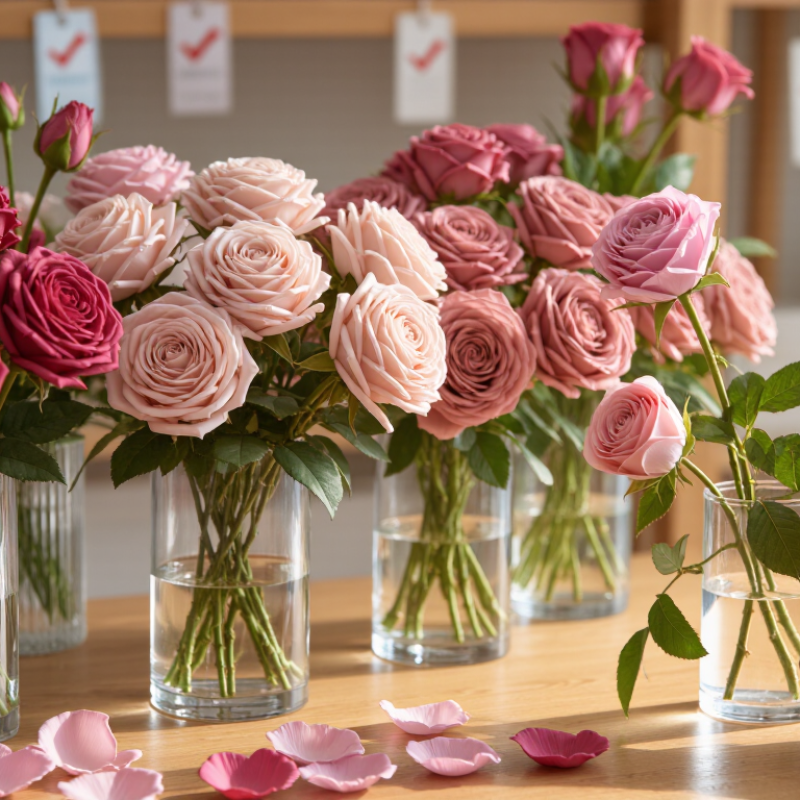
China Best Realistic Looking Fake Flowers Wholesale?
China’s artificial flower wholesale market expanded through steady export demand in 2024. Public trade reports showed strong activity in decorative plants, wedding flowers, and seasonal arrangements. Yiwu remains useful for mixed orders and price comparisons. Guangzhou serves buyers seeking larger decorative collections and flexible packaging. Dongguan and nearby manufacturing areas often support detailed molding, fabric work, and custom colors.
During supplier visits, I check leaf edges, stem flexibility, petal layering, and color changes under daylight. Realistic flowers usually have uneven textures, soft bends, and slightly varied tones. Perfect uniformity can look artificial. Market data helps, but it does not reveal every factory’s quality level. That is where buyers can misjudge. Sample approval, production photos, and carton inspections still matter.
Tips: Request samples before confirming bulk quantities. Compare flower height, material weight, odor, and packing damage. Ask for 2024 export experience and clear production lead times. Confirm product descriptions carefully. Some listings use attractive photos but offer thinner petals in production. A small trial order may cost more initially, yet it exposes weak stems, loose leaves, or inaccurate colors before a larger purchase.
Trade classification, 2024 China customs context, major sourcing hubs, product categories, and practical wholesale considerations for artificial flowers.
| Data Dimension | 2024 Reference or Value | Wholesale Relevance | Main Supply Hubs in China | Typical Product Focus | Official Classification or Source |
|---|---|---|---|---|---|
| HS heading | HS 6702 Artificial flowers, foliage and fruit; parts thereof; articles made from artificial flowers, foliage or fruit. |
Use this heading when checking international customs records for artificial flower trade. | Applicable nationwide; large commercial sourcing activity is concentrated in Zhejiang, Guangdong, Jiangsu and Fujian. | Artificial bouquets, stems, garlands, wreaths, decorative foliage and floral arrangements. | World Customs Organization HS nomenclature; UN Comtrade database. |
| HS 6702.10 | Plastics Artificial flowers, foliage and fruit made from plastics. |
Commonly used for molded, PE, PVC and other plastic-based floral products. | Guangdong, Zhejiang, Jiangsu and Fujian. | Plastic leaves, molded petals, outdoor decorative stems and durable display plants. | HS 6702.10 classification under the international Harmonized System. |
| HS 6702.90 | Other materials Artificial flowers, foliage and fruit made from materials other than plastics. |
Relevant for textile, paper, foam, wire, coated fabric and mixed-material flowers. | Zhejiang, Guangdong, Jiangsu, Fujian and Shandong. | Silk-style flowers, fabric roses, foam flowers, paper flowers and handmade arrangements. | HS 6702.90 classification under the international Harmonized System. |
| China merchandise exports | RMB 25.45 trillion China’s total goods exports in 2024, according to published customs statistics. |
Provides the national trade context in which artificial flower exports are recorded; this figure is not limited to flowers. | Export activity is supported by coastal manufacturing and logistics regions, including Zhejiang, Guangdong, Jiangsu and Fujian. | All merchandise categories, including products classified under HS 6702. | General Administration of Customs of the People’s Republic of China, 2024 annual trade statistics. |
| Yiwu, Zhejiang | Small-commodity hub One of China’s best-known wholesale markets for small decorative goods and seasonal merchandise. |
Suitable for mixed designs, low-to-medium minimum order quantities, fast sampling and consolidated purchasing. | Yiwu International Trade Market and surrounding logistics network. | Artificial bouquets, wedding flowers, seasonal decorations, wreaths, garlands and gift-oriented items. | Yiwu municipal market and commerce information; regional wholesale-market records. |
| Guangzhou and Foshan, Guangdong | Design and trading cluster Major South China commercial and manufacturing region. |
Useful for trend-led designs, event decoration, home décor collections and export-oriented packaging. | Guangzhou, Foshan and nearby Pearl River Delta manufacturing areas. | Realistic fabric flowers, decorative plants, wedding arrangements, hotel décor and large installations. | Guangdong regional manufacturing and wholesale-market information. |
| Dongguan and Shenzhen, Guangdong | Manufacturing and export gateway Part of the Pearl River Delta production and logistics system. |
Strong option for customized packaging, coordinated home décor programs and export container planning. | Dongguan, Shenzhen and neighboring Pearl River Delta industrial zones. | Artificial plants, commercial displays, customized arrangements and higher-volume export orders. | Guangdong industrial, logistics and customs-port information. |
| Suqian, Jiangsu | Artificial plant cluster Known for artificial plant and foliage production in northern Jiangsu. |
Relevant for realistic greenery, potted artificial plants and larger-volume interior decoration programs. | Suqian and surrounding northern Jiangsu production areas. | Artificial foliage, potted plants, vines, trees and interior landscaping products. | Jiangsu local industry and commerce information. |
| Quanzhou and Zhangzhou, Fujian | Decorative manufacturing region Fujian has established manufacturing capacity for home décor and seasonal products. |
Suitable for decorative floral products, textile-based designs and export-focused seasonal collections. | Quanzhou, Zhangzhou and nearby Fujian production areas. | Fabric flowers, festival décor, wreaths, hanging arrangements and home decoration items. | Fujian regional manufacturing and export-trade information. |
| Most realistic materials | Polyester fabric Often combined with molded plastic, wire stems and color-gradient printing. |
Offers a more natural touch and appearance than low-cost single-material plastic flowers. | Commonly sourced from Zhejiang, Guangdong, Jiangsu and Fujian suppliers. | Real-touch roses, peonies, hydrangeas, orchids, eucalyptus and mixed bouquets. | Product-material specification used in wholesale catalogues and customs descriptions. |
| Quality inspection points | Five-point check Color consistency, petal shape, stem strength, foliage density and packaging protection. |
Helps buyers compare realistic appearance and reduce damage, odor and color-variation risks. | Applicable to all Chinese sourcing hubs. | Sample approval, carton inspection, drop testing, color-card matching and pre-shipment inspection. | Common international wholesale quality-control practice; confirm requirements with the buyer’s destination market. |
| Trade-data search method | Reporter: China Year: 2024; Flow: exports; HS code: 6702. |
Provides a consistent way to retrieve product-level export value, quantity, partner-country and unit-value data. | Use national customs data for China totals and UN Comtrade for partner-country comparisons. | Filter further by HS 6702.10 or HS 6702.90 when material-level analysis is required. | UN Comtrade Plus; General Administration of Customs of China. |
Yiwu suits mixed orders and price comparisons. Guangzhou offers larger decorative collections and flexible packaging. Dongguan supports detailed molding, fabric work, and custom colors.
Standard styles often require 100–300 pieces per style. Custom colors may require 500–1,000 pieces. Stock designs can sometimes accept less.
Samples commonly need 5–10 days. Standard production often takes 20–35 days after approval. Export handling and transport may add 7–15 days.
Artificial stems often cost $0.80–$4.50 each. Complete arrangements may cost $8–$35. Material weight, petal quality, and packaging affect the final price.
Check leaf edges, stem flexibility, petal layers, and daylight color. Realistic flowers often have soft bends and slightly uneven textures. Perfect uniformity can look less natural.
Samples can reveal thin petals, weak stems, loose leaves, or incorrect colors. Compare them under daylight and warm lighting. Photos alone can mislead.
Include sample charges, packaging, carton fees, transport, and possible damage. Measure packed weight and carton volume. Landed cost matters more than the unit price.
Request production photos and inspect cartons before shipment. Confirm replacement terms and defect allowances in writing. Keep 5–10% extra stock for damage and shade variation.
No guarantee is perfect. Color may shift between production batches. I might still miss subtle differences, so trial orders remain sensible.
China’s artificial flower wholesale market has become a major sourcing center, supported by extensive manufacturing networks and specialized supply hubs. This overview explains how buyers can identify Realistic Looking Fake Flowers by examining petal texture, edge finishing, color accuracy, vein patterns, and three-dimensional modeling. It also compares common materials, including PE, PU, and polyester, with attention to flexibility, durability, appearance, and performance under extended UV exposure, such as 500-hour testing.
For wholesale purchasing, practical evaluation should include MOQ, sample costs, lead times, unit pricing, production capacity, and 2024 market benchmarks. Reliable quality control involves approved pre-production samples, AQL 2.5 inspection standards, color and size consistency checks, secure packaging, and documentation for applicable trade and product requirements. By combining visual assessment, material testing, supplier audits, and clear order specifications, importers and retailers can reduce quality risks and select artificial flowers that deliver a convincing appearance and dependable performance.

 Shintae