Buying Faux Flowers Bulk for international markets requires more than comparing catalog prices. A buyer must evaluate design, materials, production consistency, packaging, and delivery reliability. A rose that looks elegant online may arrive with crushed petals, uneven stems, or a strong plastic odor. Small details become expensive problems when thousands of pieces cross borders.
This guide explains how global buyers can choose suitable suppliers with greater confidence. It covers sample evaluation, minimum order quantities, material checks, color matching, carton measurements, and quality control. Polyester petals, PE leaves, wire stems, and recycled materials can behave differently during storage and transport. Ask for clear product specifications. Request recent photos and physical samples. Confirm whether the quoted price includes packaging, labeling, and export documents.
Do not trust polished images alone. Visit a factory when possible, or use an independent inspection service before shipment. Check random cartons, not only the best sample. A supplier may pass one inspection and still deliver inconsistent batches. That possibility deserves attention. Delivery schedules also need realistic buffers, especially before weddings, holidays, and seasonal retail campaigns. Buyers should verify trade terms, payment conditions, and destination-country requirements with qualified professionals. Rules differ across markets.
The cheapest offer is rarely the safest choice. A slightly higher unit cost may protect your brand, reduce returns, and improve customer trust. Yet even experienced buyers make assumptions. Recheck them. This article offers a practical framework for comparing suppliers, controlling risks, and building dependable long-term sourcing relationships.
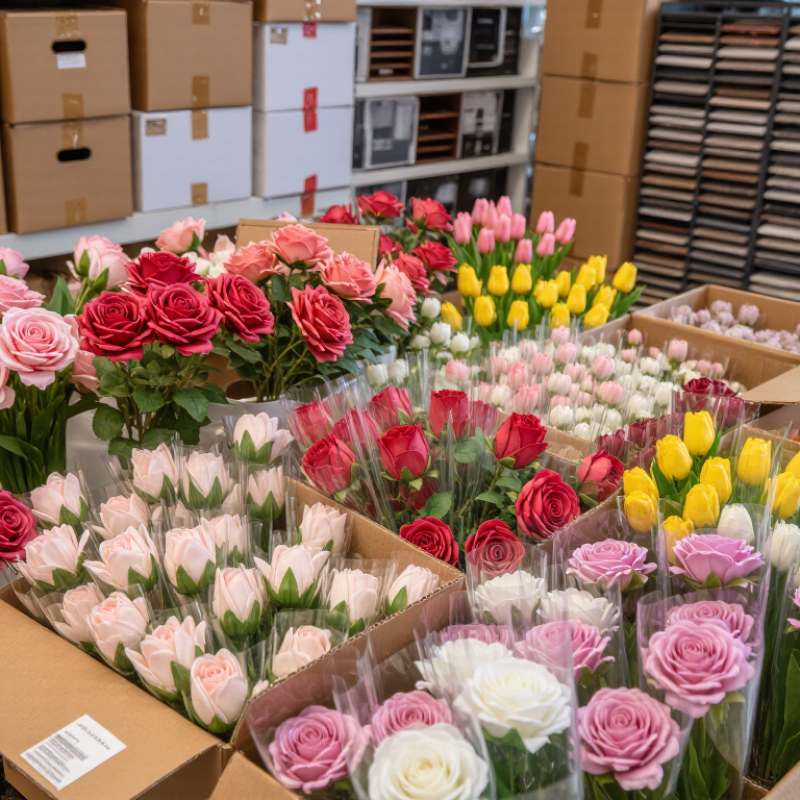
Define your buying brief before comparing bulk quotes. Specify flower types, stem length, head diameter, material, color range, and acceptable variation. A rose stem for hotel arrangements needs a different finish from a compact bunch for discount retail. Request samples in the actual colors and packaging you plan to order. Check for loose petals, visible wire, odor, and color transfer after handling. Details matter. Confirm minimum order quantities, carton dimensions, lead times, and replacement terms in writing; a low unit price can be offset by bulky freight or damaged stems.
Then map the product to a clear target market. Event planners may value realistic close-up detail and consistent color across large installations. Home décor retailers often need shelf-ready packaging and reliable replenishment. Hospitality buyers may prioritize washable surfaces and UV resistance for bright interiors. The U.S. Census Bureau reported that e-commerce represented 17.1% of U.S. retail sales in the fourth quarter of 2024. That figure is not specific to faux flowers, but it supports checking whether your online channel needs stronger product photography and protective packaging. Test a small assortment with local buyers before committing to a full container. It is easy to overestimate demand for one popular shade. Ask shoppers which stems they would actually display, and record the answers beside your sample photos.
Global buyers should evaluate faux flowers as manufactured products, not simple decorations. Material choice affects appearance, durability, shipping weight, and product safety. Polyester petals usually hold color well, while PE or PVC stems provide useful flexibility. Some low-cost plastics feel brittle after repeated bending. Request material descriptions, colorfastness results, and odor checks before approving bulk production. I have found that a beautiful sample can hide uneven stitching or weak wire cores. Ask for several samples from different production batches. Small differences matter.
Quality standards should match destination requirements and retail expectations. Check petal edges, seam strength, stem coating, leaf attachment, and dust resistance. Measure flower diameter and stem length against the approved specification. Packaging also deserves testing; crushed petals create expensive returns. Request inspection photos, carton dimensions, and a clear tolerance sheet. Design options can include realistic gradients, open blooms, buds, mixed foliage, and adjustable stems. However, too many variations may slow production and create inconsistent colors. A practical design often sells better than an overly detailed one.
Tips: Compare samples under daylight and warm indoor lighting. Rub petals gently with white cloth. Bend stems ten times. Record every result. Do not rely only on catalog images. They can flatter weak details. Leave room for revision, because the first specification is rarely perfect. Confirm labeling and documentation before shipment, according to the destination market.
Suggested evaluation weighting for comparing materials, quality standards, and product design options.
Use these suggested weights as a starting point, not as market-survey results. Check material samples, colorfastness and durability requirements, customization options, packaging, and relevant compliance documents before placing a bulk order.
When buying faux flowers in bulk, supplier verification matters more than a polished catalog. I learned this after receiving samples with uneven petals, loose stems, and inaccurate color photos. A professional-looking website proves little.
Ask for the supplier’s legal registration, operating address, tax details, and export experience. Check whether the payment account matches the registered company name. Request recent product samples, factory videos, and references from comparable buyers. Contact those references directly. Their comments about packaging, response times, and replacement policies can reveal more than sales promises.
Review certificates carefully. Confirm the issuing organization, validity period, and covered products. Ask about material composition, color consistency, carton strength, and production capacity. For global orders, compare the supplier’s shipping terms with your destination’s import requirements. Put specifications, quantities, acceptable defects, inspection rights, and delivery dates in a written contract. A small trial order is safer than a large commitment.
Do not trust urgency. A supplier demanding full payment before basic verification deserves caution. I still find it difficult to judge production quality from photos alone. Independent inspections may add cost, but they can expose crushed boxes or missing pieces before shipment. No method is perfect. Careful records and clear communication reduce avoidable surprises.
Global buyers should compare faux flower quotes by landed cost, not unit price alone. Grand View Research estimates the artificial flowers market will grow steadily through 2030, increasing competition among overseas suppliers. This growth creates more choices, but also more inconsistent quotations.
Request pricing for identical stems, colors, packaging, and carton quantities. A low price may exclude inner boxes, export packing, or freight. My first quote comparison was misleading. The cheapest supplier used thinner stems and smaller blooms. Ask for a clear breakdown of materials, labor, packing, and delivery terms. Minimum order quantities often vary by color and design. A practical target is one mixed carton for testing, rather than a full container commitment. However, some factories charge higher prices below their standard MOQ. Calculate both options.
Samples deserve careful review. Request one standard sample and one customized sample, then compare petal texture, wire strength, color accuracy, and odor. SGS reported that supply-chain quality controls improve consistency when inspection steps are documented. Use a signed sample as the production reference. Customization may include colors, stem lengths, bouquet sizes, labels, and retail boxes. It also increases tooling or setup costs. Ask whether these costs are refundable after a confirmed order. ASTM textile and material-testing guidance can support checks for colorfastness and durability, although faux flowers are not always covered by one universal standard. Build a small inspection checklist. It will not solve everything. Suppliers can still miss details.
| Product Type | Indicative Bulk Price (USD per Stem) | Typical Minimum Order | Sample Options and Costs | Customization Services | Typical Production Lead Time |
|---|---|---|---|---|---|
| Basic polyester roses | $0.20–$0.80 | 500–1,000 stems per color or style | 1–3 pieces; product and courier charges commonly apply | Color selection, stem length, simple bouquet assembly, and standard packaging | About 15–30 days after specifications and order details are approved |
| Silk-look peonies or hydrangeas | $0.80–$3.50 | 300–1,000 stems per style | 1–3 pieces; custom sample charges may apply | Petal color, bloom size, foliage, stem length, and packaging options | About 20–35 days, depending on materials and order quantity |
| Latex-coated or “real-touch” flowers | $1.50–$6.00 | 300–1,000 stems per style | 1–2 pieces; samples are generally charged, with courier separate | Color matching, flower dimensions, stem finish, and product-set development | About 25–45 days; custom molds or new components can add time |
| Artificial greenery and foliage stems | $0.15–$2.00 | 500–2,000 stems per style | Small assortment or individual samples; freight is usually separate | Leaf color, stem length, foliage density, and bundle or carton configuration | About 15–30 days for standard designs |
| Custom bouquets or mixed arrangements | $5.00–$30.00 per arrangement | 100–500 arrangements per design | 1–2 finished samples; development and shipping charges may apply | Flower mix, arrangement size, wrapping, color palette, and private-label packaging | About 25–50 days after sample approval |
Pricing and order quantities are indicative planning ranges, not supplier quotations. Actual costs depend on materials, flower dimensions, workmanship, order volume, packaging, and delivery terms. Confirm the final specification, sample fees, production schedule, and shipping costs in writing before placing an order.
International bulk orders need more than attractive product samples. Request a commercial invoice, packing list, product measurements, and carton weights before payment. Confirm the flower materials, stem coatings, dyes, and packaging details with your supplier. Customs authorities may require accurate descriptions and tariff classifications. Ask a licensed customs broker to review the destination country’s current import rules. Requirements can differ between artificial plants, decorative accessories, and mixed shipments.
Shipping choices affect both cost and delivery risk. Sea freight suits large orders, while air freight helps with urgent replenishment. Compare door-to-door and port-to-port quotes carefully. Some quotes exclude duties, storage, terminal fees, or final-mile delivery. Check carton strength before dispatch. Crushed petals and bent stems are common problems when boxes lack internal protection.
Request loading photos and a final carton count.
Delivery planning should include production time, export handling, customs clearance, and possible inspections. Keep a buffer around seasonal sales dates. Our first overseas order looked affordable, but unexpected warehouse charges reduced the margin. That mistake changed our process. We now confirm every cost in writing and check tracking milestones weekly. Still, forecasts are never perfect. Weather, port congestion, or document corrections can delay arrival. Use a small trial shipment when entering a new market. Record damage rates, clearance time, and customer feedback before scaling the next bulk order.
Specify flower type, stem length, head diameter, materials, colors, and acceptable variation. Include packaging, order quantity, and delivery timing. Details matter.
Check for loose petals, visible wire, uneven seams, and unusual odor. Rub petals with a white cloth to test color transfer. Compare colors under daylight and warm indoor lighting.
Polyester petals often hold color well. Flexible PE or PVC stems can be practical. Ask for material details, then bend stems ten times and check for brittleness.
Event planners may prefer realistic details and consistent colors. Home décor shops often need shelf-ready packaging. Hospitality buyers may value washable surfaces and UV resistance.
Record petal edges, seam strength, stem coating, leaf attachment, flower diameter, and stem length. Set clear tolerances. A beautiful sample can still hide weak wire.
Verify its registration, address, tax details, and export experience. Check that the payment account matches the registered company. Contact comparable buyers for direct feedback.
Include specifications, quantities, acceptable defects, inspection rights, delivery dates, and replacement terms. Confirm carton dimensions and labeling details before shipment.
Yes. Test a small assortment with local buyers before placing a large order. Photos can be hard to judge. Independent inspections may catch crushed boxes or missing pieces. No method is perfect.
Buying Faux Flowers Bulk for global markets requires careful planning from product selection to final delivery. Start by defining your target customers, preferred styles, seasonal demand, color trends, and expected order volume. Then evaluate materials such as silk, polyester, foam, or plastic, while checking color accuracy, durability, realism, safety requirements, and packaging quality. Consider design options including stems, bouquets, arrangements, and customized sizes to match different market preferences.
Reliable wholesale suppliers should provide clear company information, product specifications, quality records, and communication throughout the purchasing process. Compare unit prices, minimum order quantities, sample policies, production times, and customization services before making a decision. For international orders, confirm shipping terms, carton dimensions, labeling, documentation, import procedures, and delivery schedules in advance. A clear agreement and thorough inspection plan can help reduce unexpected costs, protect product quality, and ensure that bulk orders arrive efficiently and meet customer expectations.

Shintae