Choosing Fake Wedding Bouquets in 2026 requires more than matching flowers to a color palette. Modern couples are considering realism, durability, sustainability, and personal comfort. A bouquet should look beautiful beside the dress, yet feel practical during photographs, ceremonies, and travel.
Start by examining materials closely. High-quality silk petals usually show gentle texture, natural color variation, and flexible edges. Foam flowers can feel lighter, but some designs may look overly smooth under bright lighting. Touch the stems, bend the leaves, and check whether the arrangement feels balanced. Small details matter.
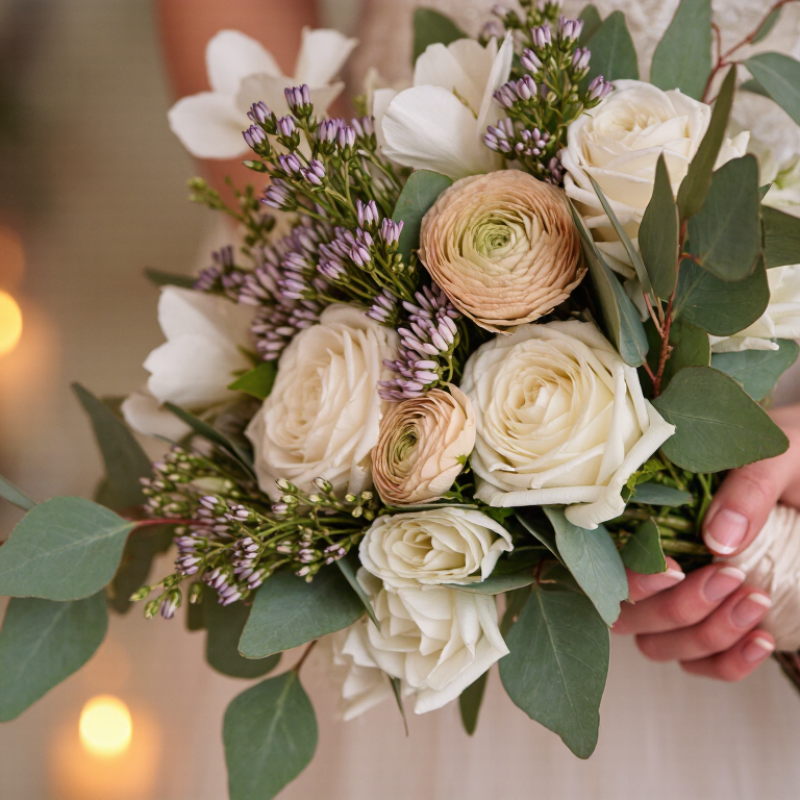
Think about your venue, season, and photography style. Soft ivory roses may suit a candlelit indoor ceremony, while eucalyptus and muted wildflowers can complement an outdoor setting. In 2026, mixed textures, refined neutral shades, and personalized preserved-style arrangements are gaining attention. Still, trends can become dated quickly. Your photographs should feel like you, not like a showroom display.
Reliable sellers should provide clear product images, dimensions, material information, care instructions, and realistic delivery estimates. Read recent customer reviews carefully, especially comments about color accuracy and stem strength. Ordering one sample can prevent an expensive disappointment. I learned that the bouquet appearing perfect online may look different in natural daylight. That is worth remembering.
Consider how the bouquet will be reused after the wedding. Some couples display it in a glass vase, while others separate flowers for keepsakes or family members. Choose a design that supports that future. Fake Wedding Bouquets should reduce wedding-day stress, not create another fragile decision. Beauty matters, but honest expectations matter too.
How to Choose Fake Wedding Bouquets in 2026?
Define your wedding style before comparing artificial bouquets. A romantic celebration may suit soft roses, trailing greenery, and rounded shapes. A modern ceremony often needs clean lines, fewer flowers, and stronger contrast. For a rustic venue, textured grasses and muted foliage can feel more natural. Look at your dress, table linens, ceremony arch, and venue materials together. The bouquet should belong to the entire setting.
Build a color palette with two main shades and one accent. Ivory, dusty blue, and muted green create a calm impression. Terracotta, cream, and olive feel warmer. Check samples under daylight, not only phone screens. Artificial petals can appear brighter indoors. This small detail affects photographs. Ask whether the stems, leaves, and flower centers match closely. Mixed tones usually look more realistic than one flat color.
Clarify your bouquet requirements before ordering. Consider size, handle length, weight, petal softness, fragrance sensitivity, and delivery timing. A large bouquet may hide a petite frame or become tiring during portraits. I once chose an oversized arrangement for a styled shoot, and its heavy handle became uncomfortable quickly. That mistake changed my advice. Choose a manageable shape, especially for long ceremonies. Inspect the bouquet from several angles, gently bend the stems, and check for loose pieces. A reliable seller should provide measurements, material details, care guidance, and clear return terms. Some imperfections are acceptable. Visible glue marks are not.
Define your wedding style, color palette, and bouquet requirements before comparing artificial flower options.
The chart uses a practical 1–10 planning score to compare the main requirements for four common wedding styles. Higher scores indicate that the requirement should receive more attention when selecting a faux bouquet.
How to Choose Fake Wedding Bouquets in 2026?
Material decides the bouquet’s first impression. Polyester petals resist wrinkles and hold color well, while polyurethane creates softer edges and more natural folds. Preserved latex usually feels realistic, but it may attract dust and lose shape in heat. A 2024 artificial flowers market report from Grand View Research projects steady growth through 2030, reflecting stronger demand for reusable ceremony décor. Still, market growth does not guarantee realism. Touch the petals. Check the stems. Some bouquets look convincing from six feet away, then feel stiff in photographs.
Shape should match the wedding setting. Round bouquets suit classic dresses and compact venues. Cascading shapes add movement beside a long aisle, but they can overwhelm petite figures. Loose, garden-style arrangements appear less manufactured because flowers face different directions. That small disorder matters. The Knot’s Real Weddings Study reports that couples continue allocating significant budgets to flowers and décor, making reusable artificial arrangements attractive for controlled spending. However, savings can disappear when oversized designs require heavy supports or expensive shipping.
Size needs a physical test, not only a screen measurement. Hold the bouquet near the waist and check whether it hides the dress details. A 25–30 centimeter diameter often suits many brides, while smaller posies work better for attendants. Realism also depends on color variation, visible veins, matte finishes, and uneven heights. I sometimes prefer one imperfect leaf. Perfect symmetry can look less alive. Check the handle carefully, too; a beautiful bouquet becomes uncomfortable after twenty minutes.
How to Choose Fake Wedding Bouquets in 2026?
When choosing a fake wedding bouquet, inspect its materials under natural light. High-quality petals should show gentle color changes, realistic edges, and consistent shaping. I once handled a bouquet with beautiful silk petals, but its plastic leaves looked overly glossy in photographs. Small details matter. Rub one petal lightly. It should not shed fibers or leave color on your fingers. A strong chemical odor may indicate poor ventilation during manufacturing, so allow the bouquet to air out before use.
Construction affects both appearance and durability. Check whether stems feel secure when you lift and rotate the bouquet. Firm wiring, tight wrapping, and balanced weight reduce accidental loosening during long ceremonies. Examine the handle closely. Rough tape, exposed wire, or sharp ends can scratch skin or snag delicate clothing. Bend one outer stem gently, but do not force it. Some arrangements use fragile internal foam that can crumble after repeated handling. I have learned that a perfect showroom shape may not survive a crowded reception.
Safety deserves practical attention. Look for loose beads, detachable berries, and small decorations, especially around children or pets. Ask for material information and any available safety testing records. If candles, heaters, or strong sunlight are nearby, confirm the bouquet’s heat limitations instead of assuming it is flame-resistant. Store it flat, away from moisture and direct sunlight. A washable surface is useful, although “washable” does not always mean fully waterproof. That distinction is easy to miss.
| Evaluation Dimension | What to Inspect | Recommended Quality Standard | Warning Signs | Practical Importance |
|---|---|---|---|---|
| Flower Material | Check whether petals and leaves are made from tightly woven fabric, molded latex, coated paper, or low-density foam. | Petals should have consistent color, realistic texture, clean edges, and enough thickness to hold their shape. | Thin plastic-like petals, uneven dye, visible creases, or pieces that deform permanently after light handling. | High impact on realism, appearance in photographs, and service life. |
| Color and Finish | Look for natural variation between inner and outer petals and a finish that is matte or softly reflective rather than glossy. | Color should remain even under indoor lighting and should not transfer when gently rubbed with a dry white cloth. | Strong chemical-looking shine, blotchy pigment, or visible color transfer during handling. | Important for close-up photography and coordination with dresses, suits, and venue décor. |
| Petal and Leaf Attachment | Gently press and rotate each flower head to test whether petals, leaves, and calyxes remain secure. | Attachments should be reinforced with stitching, molded joints, or neatly applied adhesive with no loose components. | Excess glue threads, rattling parts, detached leaves, or gaps between the flower head and stem. | Reduces the risk of damage during transport, photos, and the ceremony. |
| Stem Construction | Bend the stem slightly and check the wire core, wrapping, grip, and connection beneath the flower head. | A flexible but stable internal wire should be covered by smooth floral tape or fabric without exposed sharp ends. | Cracking tape, exposed wire, weak joints, excessive wobbling, or a stem that cannot support the bouquet weight. | Essential for comfortable carrying and reliable bouquet shape. |
| Bouquet Binding | Inspect the binding point, ribbon, pins, thread, and any hidden support used to hold the arrangement together. | The bouquet should stay compact when lifted and gently turned, while the handle remains comfortable and secure. | Loose ribbon, shifting stems, visible pins, or a handle that becomes unstable when tilted. | Directly affects handling safety and prevents the bouquet from losing its intended shape. |
| Shape Retention | Check whether flowers spring back after gentle pressing and whether the arrangement remains balanced when held upright. | Petals and foliage should recover from minor contact without permanent dents or flattened areas. | Flowers collapse easily, stems twist under light pressure, or the bouquet leans noticeably to one side. | Helps maintain a polished appearance throughout the wedding day. |
| Weight and Balance | Hold the bouquet for several minutes and assess wrist pressure, handle comfort, and center of gravity. | A practical hand-tied bouquet is commonly most comfortable when kept approximately within 0.5–1.5 kg, depending on size and holder strength. | Uncomfortable heaviness, a sharp handle, or a top-heavy design that constantly pulls forward. | Important for long ceremonies, photographs, and guests with limited grip strength. |
| Durability and Reusability | Review resistance to handling, packing, temperature changes, and repeated display. | Well-made indoor artificial bouquets can often be reused for multiple events and stored for several years when protected from sunlight, dust, and crushing. | Fading after brief light exposure, brittle petals, shedding glitter, or adhesive that softens easily. | Determines long-term value and suitability as a keepsake. |
| Moisture Resistance | Check care instructions and test a hidden area with a slightly damp cloth if permitted by the material. | Surfaces should tolerate light humidity and gentle cleaning without dye bleeding, warping, or staining. | Water marks, color bleeding, rusting wire, or foam that swells after minimal moisture exposure. | Useful for outdoor ceremonies and humid venues, but artificial flowers should not be treated as waterproof unless specified. |
| Odor and Indoor Air Comfort | Open the packaging in a ventilated area and check for persistent solvent, rubber, or strong fragrance odors. | The bouquet should have little or no noticeable odor after airing; strong odors should diminish before use. | Persistent chemical smell, heavy fragrance, eye irritation, headache, or throat discomfort. | Especially important for sensitive guests, children, and poorly ventilated venues. |
| Surface Safety | Run a clean hand over petals, leaves, ribbon, and handle to find sharp edges, splinters, or loose particles. | All contact surfaces should be smooth, with wire ends fully covered and no detachable sharp decorations. | Exposed wire, sharp pins, brittle plastic points, loose beads, or glitter that falls off easily. | Prevents scratches, snagged clothing, and small-part hazards. |
| Flammability Awareness | Identify synthetic fabrics, foam, paper, ribbons, and other combustible materials before placing the bouquet near candles or heat sources. | Keep artificial bouquets away from open flames, hot lighting, heaters, and fireworks; follow any supplied fire-safety instructions. | Unclear material information or a bouquet intended to be placed directly beside a flame. | A key venue-safety consideration because many artificial materials can melt or burn. |
| Cleaning and Storage | Check whether the bouquet can be dusted, gently vacuumed, or wiped without damaging the finish. | Prefer bouquets with clear care instructions and packaging that protects the arrangement from compression and direct sunlight. | No care guidance, permanent dust retention, or packaging that crushes petals and foliage. | Improves appearance and extends usable life after the wedding. |
| Final Pre-Wedding Test | Carry the bouquet, place it in its intended display position, and photograph it under the venue’s approximate lighting. | The bouquet should remain stable, comfortable, odor-free, visually balanced, and free of loose parts after a 15–20 minute handling test. | Discomfort, movement, shedding, color mismatch, or visible defects that only appear under flash photography. | Confirms real-world performance before the wedding day. |
Selection guideline: Prioritize secure construction, comfortable weight, smooth contact surfaces, low odor, and resistance to moderate handling. Keep all artificial bouquets away from open flames and high heat, regardless of material.
Choosing a fake wedding bouquet in 2026 starts with your dress. A fitted satin gown suits a compact, structured arrangement. A flowing chiffon dress needs softer stems and visible movement. Match the bouquet’s scale to your body, not only the aisle. In styling consultations, I often see oversized bouquets hide beautiful waist details. That mistake is easy to correct.
Your venue and season also shape the decision. For a garden ceremony, silk ranunculus, eucalyptus, and loose greenery feel believable. A historic hall may suit deep-toned roses and a rounded shape. The Knot’s 2024 Real Weddings Study reports an average wedding cost of $33,000 and 116 guests. Reusable flowers can protect more of that budget, especially across multiple events. Grand View Research’s 2024 artificial flowers market analysis identifies weddings and events as important demand areas. Still, quality varies sharply.
Photography changes everything. Matte petals usually photograph more naturally than glossy plastic surfaces. Ask your photographer for test images under flash, shade, and direct sunlight. Pale flowers can disappear against an ivory dress. Add one darker accent near the center. Avoid excessive white. I learned this after a bouquet looked flat in bright outdoor portraits. The bouquet should also remain light enough for several hours. A heavy handle becomes tiring before the first dance. Slightly uneven stems can look more botanical, although perfection still tempts me.
Start with the full cost, not only the bouquet’s displayed price. Ask whether stems, wrapping, delivery, and color adjustments are included. A realistic budget often falls between 40 and 180 dollars per bouquet, depending on size and materials. Request a written quote. It prevents unpleasant surprises later. Foam flowers usually cost less than highly detailed fabric arrangements, but they may look less natural in close photographs.
Customization should match your venue, dress, and seasonal lighting. Share fabric swatches, ceremony photos, or a simple color list with the maker. Ask for flower dimensions, stem flexibility, and a sample image under daylight. In my styling experience, slightly uneven textures often look more convincing than perfectly identical blooms. I once chose a bouquet that looked beautiful online but appeared too glossy indoors. That mistake changed how I assess product photos.
Care is simple, but not effortless. Store bouquets upright in a cool, dry box away from direct sunlight. Use a soft brush for dust, and avoid soaking glued parts. Check care instructions before ordering, especially for painted petals or delicate ribbons. Purchase timing matters too. Allow six to ten weeks for custom work, plus extra time for revisions. Ready-made bouquets may arrive faster, though color matching can be limited. Leave room for one imperfect detail. Handmade pieces rarely look exactly like a screen image.
Match the bouquet with your dress, venue, linens, and ceremony arch. Soft roses suit romantic settings. Clean lines fit modern spaces. Textured grasses work well in rustic venues. The bouquet should feel connected. Not separate.
Choose two main shades and one accent color. Ivory, dusty blue, and muted green feel calm. Terracotta, cream, and olive feel warmer. Check samples in daylight. Phone screens can mislead you.
Hold the bouquet near your waist before ordering. A 25–30 centimeter diameter suits many people. Smaller posies may suit attendants better. Large bouquets can hide dress details and strain your wrist. Comfort matters more than drama.
Soft polyurethane petals often show natural folds. Polyester resists wrinkles and keeps its color. Preserved latex can feel realistic but may collect dust. Touch the petals when possible. Photos cannot show everything.
Look for matte finishes, visible veins, uneven heights, and varied flower directions. Mixed tones appear more natural than one flat color. Slight disorder helps. Perfect symmetry can look manufactured.
Check the measurements, handle length, weight, stem flexibility, and loose pieces. Examine the bouquet from several angles. Gently bend the stems. Visible glue marks are unacceptable. Minor handmade differences are usually fine.
A practical range is about 40 to 180 dollars per bouquet. Price depends on materials, size, delivery, wrapping, and customization. Request a written quote. A low displayed price may exclude important costs.
Store it upright in a cool, dry box. Keep it away from direct sunlight. Remove dust with a soft brush. Avoid soaking glued parts. Painted petals and delicate ribbons need extra care.
Allow six to ten weeks for custom work and revisions. Ready-made bouquets may arrive sooner. Color matching can be limited, though. Leave time for inspection and possible changes. Handmade work rarely matches a screen image perfectly.
Choosing Fake Wedding Bouquets in 2026 starts with defining your wedding style, color palette, and practical bouquet requirements. Consider whether your celebration is classic, modern, rustic, romantic, or minimalist, then select colors and flower combinations that support the overall atmosphere. Compare materials such as silk, fabric, foam, and high-quality synthetic petals, paying attention to realistic textures, natural shapes, suitable sizes, and balanced arrangements. A well-made bouquet should have secure stems, neat construction, durable details, and safe, comfortable handling throughout the ceremony and reception.
Your bouquet should also complement your dress, venue, season, and photography style. Soft colors may suit bright outdoor settings, while richer tones can add depth to indoor celebrations. Before purchasing, review the total cost, customization possibilities, care instructions, and delivery schedule. Ordering early allows time to inspect the bouquet, request adjustments, and coordinate matching flowers for attendants or décor. With thoughtful planning, Fake Wedding Bouquets can provide a beautiful, consistent, and lasting accessory that remains memorable long after the wedding day.

Shintae