What Are the Top 10 Artificial Office Plants for Offices?

Time:2026-10-23 Author:Isabella
0%

Artificial Office Plants can transform a dull workspace into a calmer, more welcoming environment. A realistic fern beside a reception desk, a tall ficus near a window, or a compact succulent on a filing cabinet can add visual warmth without demanding watering or sunlight. However, appearance alone should not guide a buying decision.

This guide examines ten strong choices for modern offices, based on realism, durability, maintenance, size, and placement flexibility. It also considers practical details, such as dust-resistant leaves, stable pots, UV protection, and materials suitable for busy commercial spaces. A plant that looks attractive online may appear overly glossy under bright office lighting. That difference matters.

No list is perfect. Personal taste varies.

The selections reflect common workplace needs, including narrow corridors, shared desks, meeting rooms, and reception areas. They also account for cleaning routines and long-term value, since inexpensive plastic can fade or crack after repeated handling. High-quality silk leaves, weighted bases, and natural-looking stems often create a more convincing display. Still, even premium Artificial Office Plants need occasional dusting and thoughtful positioning. A crowded corner can make a beautiful plant feel misplaced. By comparing these options carefully, office managers and interior designers can choose greenery that supports the room’s character, rather than simply filling empty space.
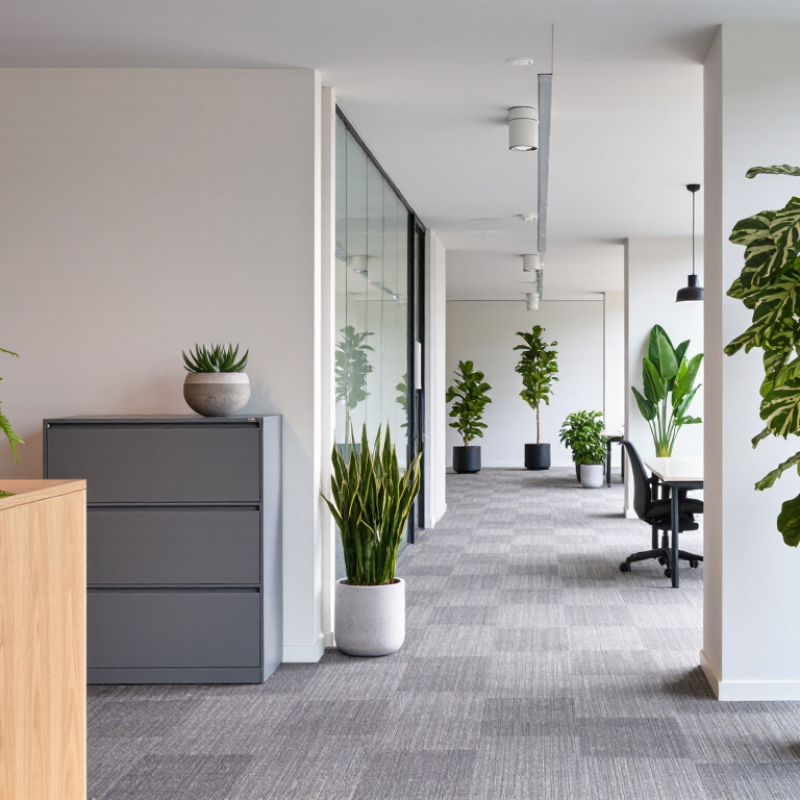
What Are the Top 10 Artificial Office Plants for Offices?

What Are Artificial Office Plants and Why Are They Used?

What Are Artificial Office Plants and Why Are They Used?

Artificial office plants are decorative replicas made from materials such as polyester, plastic, fabric, and coated wire. They imitate trees, palms, succulents, hanging vines, and potted foliage without requiring sunlight, watering, or pruning. Common choices include faux fiddle-leaf trees, bamboo, monstera plants, snake plants, and preserved-style moss panels.

They are used to soften hard office interiors. A green plant beside a reception desk can make the space feel less clinical. A tall artificial tree can also divide work zones without blocking light. Maintenance teams value their consistency. They do not wilt during holidays or shed soil near computers. Still, appearances can mislead.

The Human Spaces Global Report surveyed 7,600 workers across 16 countries. It found that workplaces with natural elements were linked with 15% higher wellbeing, 6% greater productivity, and 15% more creativity. However, that research focused mainly on real nature, not artificial plants. This distinction matters. Artificial foliage may support visual comfort and perceived warmth, but it does not purify air or provide measurable biological benefits. The U.S. Environmental Protection Agency identifies ventilation, filtration, and source control as stronger indoor-air-quality measures. A dusty plastic leaf may even damage the intended impression. Regular cleaning remains necessary. Choosing realistic textures, stable bases, and non-obstructive placement requires practical judgment, not decoration alone.

What Are the Top 10 Artificial Office Plants?

Artificial office plants are decorative plants made from materials such as polyester, plastic, and fabric. They are used to add greenery, visual warmth, and natural-looking design to offices without watering, sunlight, pruning, or ongoing plant care.

The chart compares representative heights commonly used for artificial office plant arrangements. Actual dimensions vary by pot size, design, and manufacturer.

How Are the Top 10 Artificial Office Plants Selected?

Selecting the top 10 artificial office plants requires more than judging photographs. I assess visual realism, leaf texture, stem flexibility, pot stability, and workplace scale. The shortlist includes artificial snake plants, pothos, ZZ plants, fiddle-leaf figs, monstera, areca palms, rubber plants, peace lilies, dracaenas, and eucalyptus stems. Each option suits a different office layout.

I also consider employee experience. A plant near a monitor should not block sightlines or create distracting glare. Larger plants need weighted pots and stable bases, especially beside walkways. Materials should be low-odor, easy to clean, and suitable for regular indoor use. Dust resistance matters. So does color accuracy under cool office lighting. I compare products in meeting rooms, reception areas, and narrow workstations before ranking them. My judgment is not perfect. A highly realistic plant may still feel artificial in a poorly chosen pot.

Tips: Measure the space before buying. Check the plant from several angles, not only straight on. Choose softer foliage for quiet rooms and taller forms for empty corners. Wipe leaves monthly with a dry microfiber cloth. Avoid overcrowding desks. A simple scoring sheet can help: realism, safety, maintenance, durability, and price. Give each category a clear rating. Personal taste still affects the result, and that should be acknowledged.

What Are the Top 10 Artificial Office Plants for Offices? - How Are the Top 10 Artificial Office Plants Selected?
Selection scores are based on realistic visual appeal, office versatility, ease of cleaning, space adaptability, and long-term practicality. Because these plants are artificial, light and watering requirements refer to the characteristics that make their realistic replicas suitable for office environments.
Rank Artificial Plant Type Botanical Reference Best Office Placement Realistic Visual Features Typical Artificial Height Cleaning Requirement Pet-Safety Consideration Office Versatility Score
1 Snake Plant Dracaena trifasciata Reception desks, corridors, meeting rooms, and narrow corners Vertical sword-shaped leaves with green and yellow variegation 60–150 cm Dust every 2–4 weeks; wipe leaves with a soft damp cloth No live-plant exposure; replicas avoid ingestion concerns 9.6/10
2 Pothos Epipremnum aureum Shelves, filing cabinets, partitions, and suspended displays Heart-shaped leaves and naturally trailing vines 45–120 cm vine length Dust leaves and gently untangle trailing stems when needed No live-plant exposure; replicas avoid calcium oxalate concerns 9.5/10
3 ZZ Plant Zamioculcas zamiifolia Low-traffic corners, conference rooms, and filing areas Glossy, symmetrical leaflets on upright stems 60–120 cm Wipe broad leaves monthly to preserve a polished appearance No live-plant exposure; replicas avoid live-plant toxicity concerns 9.4/10
4 Monstera Monstera deliciosa Reception areas, collaborative spaces, and lounge seating Large tropical leaves with distinctive natural-looking splits 90–210 cm Clean large leaves regularly; inspect leaf joints for dust buildup No live-plant exposure; replicas avoid live-plant ingestion concerns 9.2/10
5 Rubber Plant Ficus elastica Executive offices, entrance areas, and open-plan dividers Broad, thick leaves with deep green or burgundy tones 120–210 cm Wipe broad leaves every 2–4 weeks for a natural sheen No live-plant exposure; replicas avoid latex-sap concerns 9.1/10
6 Areca Palm Dypsis lutescens Large reception zones, break rooms, and open-plan offices Feathery arching fronds that create a soft tropical effect 150–240 cm Dust individual fronds carefully; clean the container periodically No live-plant exposure; replicas avoid live-palm care and ingestion issues 8.9/10
7 Fiddle-Leaf Fig Ficus lyrata Minimalist reception spaces, meeting rooms, and feature corners Large violin-shaped leaves on a clean upright trunk 120–210 cm Wipe leaves carefully; avoid bending the broad leaf surfaces No live-plant exposure; replicas avoid live-ficus sap concerns 8.8/10
8 Dracaena Dracaena fragrans Reception counters, hallway ends, and workstation dividers Long strap-like leaves arranged on a slender cane 90–180 cm Dust narrow leaves and check the base for accumulated debris No live-plant exposure; replicas avoid live-plant toxicity concerns 8.7/10
9 Bird of Paradise Strelitzia reginae Contemporary lobbies, creative studios, and spacious lounges Large paddle-shaped leaves with a bold architectural form 120–210 cm Wipe each broad leaf and reshape separated leaves after handling No live-plant exposure; replicas avoid live-plant ingestion concerns 8.6/10
10 Peace Lily Spathiphyllum wallisii Reception desks, quiet rooms, wellness areas, and small offices Glossy lance-shaped leaves with distinctive white spathes 45–100 cm Clean leaves and white floral elements gently to prevent discoloration No live-plant exposure; replicas avoid live-plant ingestion concerns 8.4/10

What Are the Top 10 Artificial Plants for Office Spaces?

Artificial plants can make office spaces feel calmer, especially where daylight is limited. The World Green Building Council’s Better Places for People report notes that people spend about 90% of their time indoors. The Human Spaces Global Report also associates biophilic workplaces with 15% higher wellbeing and 6% higher productivity. However, those findings mainly concern nature and living plants. Artificial foliage is not an air-quality solution. It offers visual comfort instead.

For office spaces, my practical top ten are snake plants, monstera, fiddle-leaf figs, rubber trees, areca palms, pothos, ZZ plants, ferns, eucalyptus stems, and olive trees. Snake plants suit narrow desks. Areca palms fill unused corners. Pothos works well on shelves, while tall fiddle-leaf figs create a lobby focal point. Ferns soften meeting rooms. Olive branches add a restrained, modern detail. The ranking is subjective.

Snake plants Snake plants suit narrow desks.
Areca palms Areca palms fill unused corners.
Pothos Pothos works well on shelves.

Material quality matters more than plant variety. Choose UV-resistant leaves near windows. Select weighted pots for busy walkways. Fire-performance documentation should accompany large installations. Facilities teams should also check seams, loose leaves, and dust buildup each month. A fake fern can still look fake. That weakens the room’s credibility. I have found that fewer, larger arrangements often look more convincing than crowded displays. Still, maintenance habits vary, and no artificial plant can replace fresh air, daylight, or thoughtful office planning.

How Do Different Office Areas Suit Different Artificial Plants?

Artificial plants work best when their shape matches the office area. In reception spaces, tall artificial palms, fiddle-leaf trees, and bird-of-paradise plants create a welcoming vertical focus. Their broad leaves soften hard flooring and glass walls. However, oversized plants can block sightlines and make a small entrance feel crowded.

For open workstations, compact pothos, snake plants, and artificial succulents fit neatly on desks or low cabinets. Their structured forms add color without distracting employees.

Meeting rooms suit understated options, such as eucalyptus stems, bamboo, or slim ficus trees. These plants support a calm visual atmosphere.

Break rooms can handle brighter choices, including artificial orchids and flowering plants.

In my experience, realistic texture matters more than expensive decoration. Some leaves still look plastic under strong lighting. That detail deserves honest attention.

Tips:

Match plant height to furniture, and leave walking paths clear. Dust leaves monthly with a soft microfiber cloth, especially near printers and air vents. Check the plant from different angles before buying. A beautiful front view may hide an empty back. Use neutral pots for formal offices, but warmer materials can make staff areas feel less sterile. Rotate arrangements occasionally. Even artificial greenery can become visual background noise.

How Should Artificial Office Plants Be Maintained and Arranged?

Artificial office plants need a simple maintenance plan, not occasional attention. Dust leaves weekly with a microfiber cloth or soft brush. Wipe plastic stems monthly with a lightly damp cloth. Dry every surface afterward. Avoid oil-based cleaners, which can create shine and attract more dust. Check fading near windows every quarter. Replace badly discolored leaves instead of hiding them. Dust wins.

A 2015 global workplace study surveyed 7,600 employees across 16 countries. It found that 47% lacked live plants at work, while 33% had no natural view, according to The Global Impact of Biophilic Design in the Workplace. Artificial plants cannot purify indoor air. The U.S. Environmental Protection Agency reports that indoor pollutant levels can be two to five times higher than outdoor levels. Keep ventilation and cleaning systems active.

Arrange taller artificial plants near empty corners, reception zones, or low-traffic walls. Place smaller plants beside monitors, but keep screens, vents, and emergency routes visible. Leave enough space for vacuuming and daily movement. The WELL Building Standard v2 supports biophilic elements while emphasizing healthy, maintainable environments. In practice, dense clusters often look attractive in photographs but collect dust quickly. I have found that fewer plants, spaced clearly, appear cleaner and more intentional. Review the layout every three months. Looks matter.

FAQS

What are artificial office plants made from?

They are decorative replicas made from plastic, polyester, fabric, and coated wire. They imitate trees, vines, palms, and potted foliage.

Why do offices use artificial plants?

They soften hard interiors, glass walls, and reception desks. They need no sunlight, watering, pruning, or holiday care.

Do artificial plants improve indoor air quality?

No. They do not purify air or provide proven biological benefits. Ventilation, filtration, and source control matter more.

Which artificial plants suit reception areas?

Tall palms, fiddle-leaf trees, and bird-of-paradise shapes create a strong vertical focus. Keep entrances open and sightlines clear.

What plants work well on office desks?

Compact pothos, snake plants, and succulents fit beside monitors or on low cabinets. Avoid blocking screens or creating glare.

How should artificial plants be cleaned?

Wipe leaves monthly with a dry microfiber cloth. Pay extra attention near printers, vents, and dusty corners.

What should buyers check before choosing an artificial office plant?

Check leaf texture, color accuracy, stem flexibility, pot stability, odor, and overall scale. View the plant from several angles.

How can offices avoid making artificial plants look cheap?

Choose realistic textures, stable bases, and suitable pots. A convincing leaf can still look wrong in an unsuitable container.

Are artificial plants suitable for meeting rooms?

Yes. Eucalyptus stems, bamboo, and slim trees create a quieter visual atmosphere. Keep them away from cameras and walking paths.

Is choosing the best artificial plant completely objective?

No. Personal taste affects the result. My ranking may overlook how lighting changes one plant’s appearance. That needs reconsideration.

Conclusion

Artificial Office Plants are realistic decorative plants designed to bring the visual benefits of greenery into workplaces without the watering, sunlight, or daily care required by living plants. This article explains why offices use them to create a more welcoming, comfortable, and visually balanced environment. It also describes how the top ten choices are selected, considering appearance, durability, size, realism, safety, and suitability for different office styles.

The guide introduces ten versatile artificial plants and explains how to match them with specific areas, such as reception desks, meeting rooms, workstations, hallways, and break spaces. It also provides practical advice on arranging plants to improve balance and avoid clutter, while showing how regular dusting, gentle cleaning, and occasional repositioning can keep them attractive. By combining thoughtful selection, suitable placement, and simple maintenance, offices can enjoy a fresh and professional atmosphere throughout the year.


Isabella

Isabella

Isabella is a dedicated marketing professional with a sharp focus on driving brand growth and engagement through strategic content creation. With an extensive background in digital marketing, she combines her passion for storytelling with her keen understanding of industry trends to deliver......