Choosing the right Giant Artificial Flowers supplier requires more than comparing catalog prices. Buyers must examine materials, craftsmanship, shipping reliability, and after-sales support. A six-foot peony may look impressive online, yet its petals can appear flat under event lighting. Its metal stem may also bend during delivery.
This guide reviews ten leading Giant Artificial Flowers suppliers worldwide through practical purchasing criteria. These include flower size, fabric quality, color accuracy, UV resistance, flame-retardant options, customization, minimum order quantities, and production lead times. We also consider packaging details, such as reinforced cartons, protective wrapping, and replacement-petal availability. Small details matter.
Luther Burbank, the respected American horticulturist, once said, “Flowers always make people better, happier, and more helpful.” His observation also suits artificial floral design. Large blossoms can transform hotel entrances, wedding stages, retail windows, and photography spaces without daily watering. However, beauty alone is not enough. A supplier should provide clear samples, consistent dimensions, realistic product photos, and written quality standards.
Some comparisons remain imperfect. Supplier capabilities can change, and online images may hide stitching flaws or weak support frames. Regional freight costs can also alter the final price considerably. Therefore, this ranking should support careful evaluation, not replace direct communication. Ask for recent project photos. Request a sample when possible. Confirm packaging before payment.
The strongest suppliers combine visual realism with dependable manufacturing. That balance helps buyers create memorable installations while reducing costly surprises.
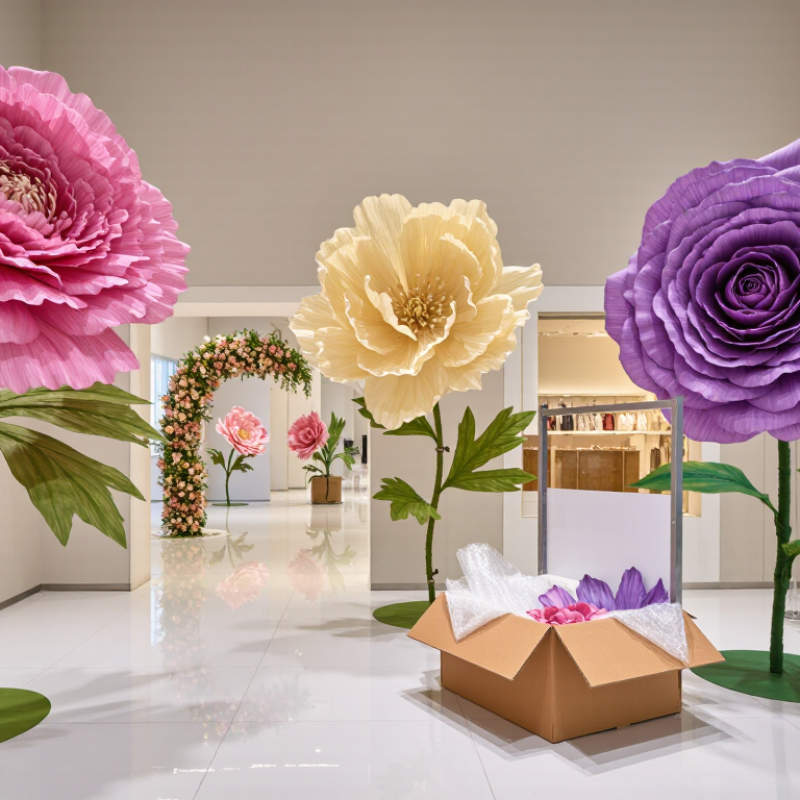
Giant artificial flowers are oversized decorative blooms made from fabric, foam, plastic, or reinforced paper. Some measure over one meter wide. Their stems often contain metal or fiberglass supports, helping them stand in busy spaces. Unlike fresh flowers, they require no watering and can remain attractive for months indoors.
These flowers appear in hotel lobbies, wedding venues, retail windows, photo studios, restaurants, and exhibition halls. A single large bloom can frame an entrance, while several flowers can create a dramatic backdrop. They are also useful in places with weak natural light or strict maintenance limits. However, size can create problems. Heavy petals may bend, colors can fade near windows, and unstable bases may become unsafe. A professional supplier should explain material strength, flame-resistance testing, packaging, and replacement options. Ask for close-up images and exact dimensions, not only polished room photos. Details matter.
Tips: Measure the installation area before ordering. Check doorway widths and elevator space. Choose UV-resistant materials for sunny locations. Secure tall stems with weighted bases. Keep a sample nearby, because online colors can look slightly wrong. I sometimes underestimate how much storage these flowers need. That mistake is easy to avoid. Suppliers with clear specifications and careful packing usually make large installations simpler and more reliable.
Choosing a giant artificial flower supplier requires more than attractive catalog photos. In practice, I examine full-size samples before discussing a large order. A flower may look impressive online but feel unstable in a showroom. Check petal stitching, color consistency, stem strength, and the quality of the base. Measure the actual height, bloom width, and packed dimensions. Small differences can affect installation costs. Ask whether materials resist fading, moisture, and repeated handling. Request test reports when the flowers will be used in public venues. Safety documentation should match the destination market.
Supplier experience also matters. Ask for project photos, production timelines, and references from comparable installations. A reliable supplier explains minimum order quantities, replacement parts, packaging methods, and payment stages clearly. Their answers should remain consistent across sales, technical, and shipping teams. Confirm whether they can produce custom colors without changing the texture. Request a pre-production sample for approval. It feels slower, but it prevents expensive surprises. Review export documents and shipping insurance carefully. Communication quality is evidence of operational discipline. Still, no checklist is perfect. I have seen polished samples hide weak cartons and delayed spare parts. Build extra time into the schedule. Compare at least three written quotations, not only unit prices. Total value includes durability, service, packaging, and realistic delivery performance.
Top 10 Giant Artificial Flower Suppliers Worldwide
The leading ten suppliers stand out through product range, not catalog size alone. Many offer oversized roses, peonies, lilies, sunflowers, and tropical leaves. Their collections may include tabletop stems, wall flowers, arches, and complete display installations. Some suppliers provide foam, fabric, latex, or molded plastic petals. Each material creates a different texture under strong event lighting. Experienced buyers should compare flower diameters, stem strength, color options, and packing methods. A beautiful sample can still arrive damaged.
Product range also means customization. Reliable suppliers often adjust petal colors, flower heights, foliage density, and base designs. They may support wedding stages, retail windows, hotels, exhibitions, and photography studios. Ask for recent project photos and physical samples before placing a large order. Confirm whether the listed size includes the stem and container. This detail is often unclear. I have found that broad catalogs sometimes hide limited stock, inconsistent dye lots, or slow replacement support. That weakness deserves attention.
Tips: Request a complete product list and current inventory. Compare samples in daylight and warm lighting. Check packaging around delicate petals and wire stems. Ask about cleaning instructions, fire-safety documentation, and indoor or outdoor suitability. Avoid choosing only by price; a low-cost flower may lose shape after repeated installation. Suppliers should also explain lead times, customization limits, and quality inspection procedures. Brands change, catalogs change, and online images can mislead.
This chart compares common giant artificial-flower product formats by representative display diameter. The categories reflect product types widely offered across the global artificial-flower market.
Measurement: Representative product diameter in centimeters. Actual dimensions vary by supplier, flower style, and customization.
Giant artificial flowers require materials that balance scale, weight, weather resistance, and visual realism. Many suppliers use polyester or silk-like fabric for petals, with PE or PVC centers. Steel, fiberglass, or reinforced plastic usually supports the stems. For outdoor displays, ask about UV-resistant coatings, drainage, fading tests, and suitable fire-safety documentation. Indoor flowers can use softer fabrics, but thin petals may crease during shipping. That detail is often overlooked.
Customization may include flower species, petal colors, stem height, bloom diameter, base design, and logo-free event styling. Provide drawings, reference photos, Pantone colors, and installation measurements. A sample is valuable. Samples matter. It can reveal uneven stitching, weak joints, or unrealistic color changes under warm lighting. Custom molds and large quantities usually require higher minimum order quantities and longer production schedules.
Pricing varies widely. A 1.5-meter fabric flower may cost about 80 to 250 US dollars, while reinforced outdoor sculptures can exceed 1,000 dollars. Freight, packaging, taxes, assembly, and installation should be listed separately. A low quote can mislead when crating is excluded. Request a written quotation, material specifications, sample approval, production photographs, inspection terms, and replacement policies. Confirm payment stages and delivery windows before ordering. I would also test one complete unit before committing to a large installation; even experienced buyers sometimes underestimate storage space and wind exposure.
Choosing a giant artificial flower supplier requires more than comparing catalog photos. Grand View Research reports that the artificial flowers market is growing at more than 5% annually, increasing supplier competition and quality variation. Ask for physical samples, not only digital renderings. Check petal color under warm and cool lighting. Inspect stem joints, internal wire strength, fabric shedding, and base stability. A 2.5-meter flower that bends during installation is not a decorative success.
Material documentation matters. Request fabric composition, UV-resistance test results, flame-performance information, and cleaning instructions. Requirements differ by venue and country, so verify them with your project’s safety consultant. ISO 2859-1 sampling guidance can support a consistent pre-shipment inspection plan. Define acceptable limits for wrinkles, color deviation, loose petals, and damaged packaging. Keep photographs in the purchase record. Small details prevent expensive arguments later.
Logistics deserve equal attention. Measure packed cartons, calculate volumetric weight, and confirm whether the supplier can protect oversized stems with reinforced sleeves. Compare total landed cost, not unit price. A lower quote may hide higher freight, replacement, or installation expenses. Industry logistics reports continue to show pressure from volatile freight rates, so request a written validity period for quotations. Start with a pilot order when possible. Even experienced buyers misjudge scale from a screen. Build a buffer for production and inspection time, and evaluate how quickly the supplier answers difficult questions. Reliability appears before the contract is signed.
They are made from fabric, foam, plastic, latex, or reinforced paper. Metal or fiberglass supports often strengthen the stems. Texture changes under bright event lighting.
They appear in hotel lobbies, wedding venues, retail windows, restaurants, and exhibition halls. A single bloom can frame an entrance. Several flowers can form a dramatic photo backdrop.
Measure the installation area, doorway width, elevator space, and storage location. Confirm the flower height, bloom width, stem length, and packed dimensions. I once underestimated storage space. It caused unnecessary trouble.
Request physical samples, recent project photos, written quotations, and customer references. Inspect petal stitching, color consistency, stem strength, and base quality. Clear communication is useful evidence.
Ask about flame-resistance testing, weighted bases, structural strength, and public-venue safety documents. Tall stems need secure support in busy areas. A beautiful flower becomes risky if it tips easily.
Choose UV-resistant materials for sunny rooms and moisture-resistant materials for damp locations. Compare samples in daylight and warm lighting. Online colors can look slightly wrong.
Suppliers may adjust petal colors, flower heights, foliage density, and base designs. Ask whether custom colors change the material texture. Request a pre-production sample before approving a large order.
Ask for packed dimensions, carton protection, shipping insurance, and replacement-part options. Delicate petals and wire stems need careful internal padding. A polished sample cannot guarantee strong packaging.
Not always. Compare durability, packaging, service, inspection procedures, and realistic delivery times. A cheap flower may lose its shape after repeated installation. No checklist catches everything.
Giant Artificial Flowers are oversized decorative blooms designed to create a bold visual impact in venues such as weddings, exhibitions, hotels, retail spaces, photography studios, and private events. This guide explains how to assess suppliers worldwide by examining product variety, craftsmanship, material quality, production capacity, customization services, communication, delivery reliability, and customer support. It also presents a practical comparison of leading supplier types according to their product range, including individual flowers, floral walls, arches, centerpieces, and complete decorative installations.
The article further explores key purchasing considerations, such as fabric, foam, paper, plastic, and other commonly used materials, along with color matching, size adjustments, structural design, packaging, minimum order quantities, sample availability, pricing models, and shipping options. Finally, it offers a clear framework for selecting the right supplier based on project goals, budget, timeline, location, customization needs, and expected visual effect, helping buyers make confident and efficient decisions.

Shintae